



Boodles May Festival: The Path to New York
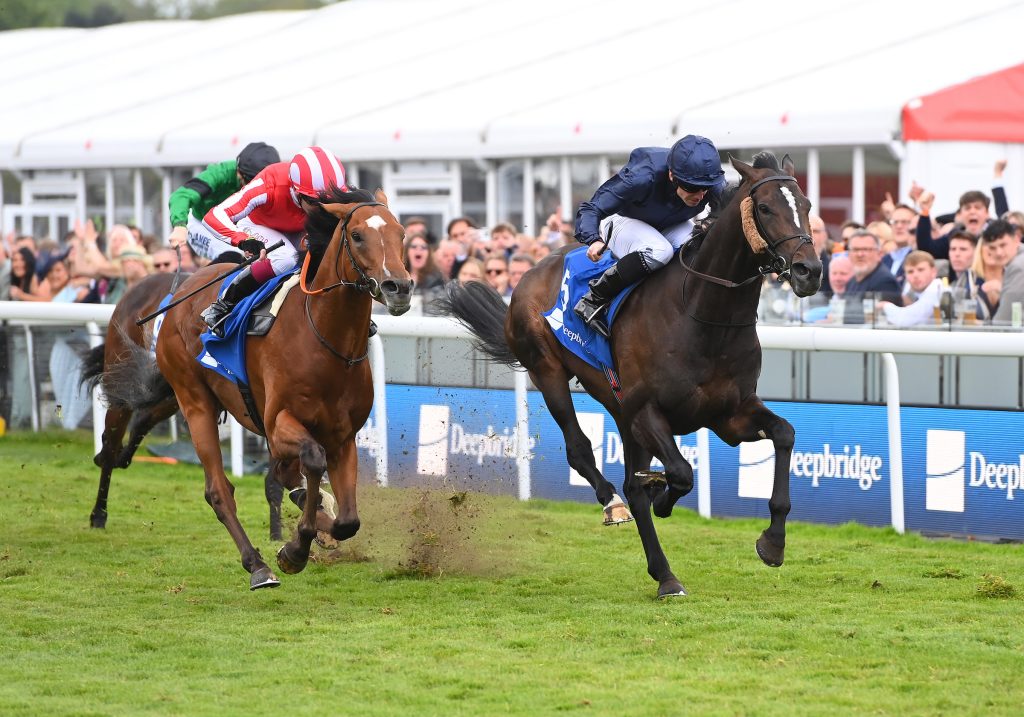
The landmark transatlantic partnership formed between Chester Racecourse and NYRA (New York Racing Association) unites the world’s oldest racecourse with one of America’s oldest sporting venues.
As announced earlier this year, last week’s winners of the Ladbrokes Ormonde Stakes (G3) and the Deepbridge Huxley Stakes (G2) – both contested at the Boodles May Festival – have earned automatic qualification into the prestigious Belmont Gold Cup (G2) and Resorts World Casino Manhattan Stakes (G1). Both races have been run at Saratoga Racecourse since 2024 while Belmont Park undergoes development and takes place in early-June, the latter being valued at $1 million.
This year’s qualifying races at Chester were both won by trainer Aidan O’Brien as Jan Brueghel (Ormonde Stakes) and Lambourn (Huxley Stakes) were both guided to victory by Ryan Moore. Sadly, both winners seem likely to pass up the opportunity to run in the US and their connections have the G1 Coronation Cup at Epsom on Derby weekend as their preferred target. However, this link up between Chester Racecourse and the NYRA got our data team thinking and we decided to look at the data we have for the turf races in New York and Chester to see if we could predict how a winner from Chester may fare in the future.
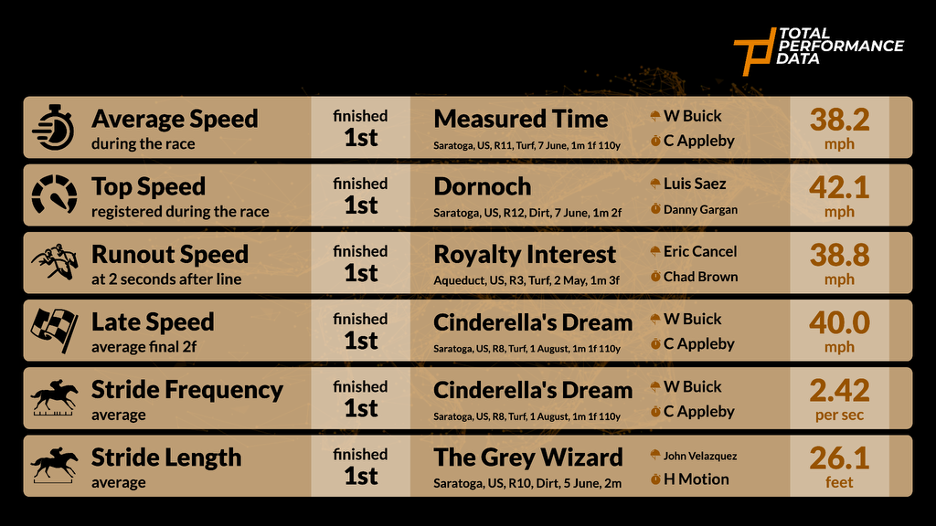
Above, we have looked at every race run on the turf in New York since 2024 across both Saratoga and Aqueduct racecourses. Data is based on 200+ races over a trip of 1 mile and above and highlights horses that have recorded the highest figures for our unique performance metrics.
The first point to catch is that half of those leading metrics were recorded by horses that are trained in the UK, including Measured Time when he won the Manhattan Stakes at Saratoga in 2024 for Charlie Appleby and William Buick. That’s perhaps not entirely surprising given the record that the European horses have in G1 turf races in the US, but how do these figures compare to those from Chester?
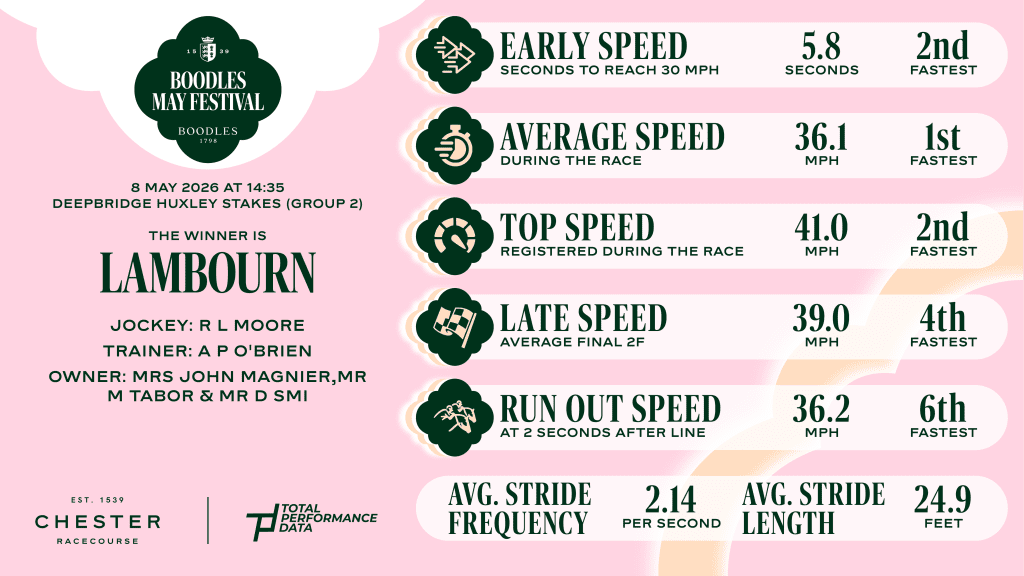
This is the TPD Infographic from the Huxley Stakes at Chester last week. The going was described as “Good” and given that Lambourn ran a winning time of 1:28.77, which was 1.69s faster than the TPD Expected time for the race with a finishing speed of 107%, we can say with some confidence that it was certainly no softer than that. Lambourn won the Derby in 2025 and was winning at the Boodles May Festival for the 2nd year in a row. We can therefore assert that the 10-furlong trip in the Huxley Stakes was the bare minimum trip for this son of Australia.
Under similar conditions that he may encounter at Saratoga, Lambourn was able to get within 3% of the fastest top speed and late speed figures recorded in New York in the last 2 seasons. These figures were also recorded on his first run for 237 days and at Chester, where the runners are almost continuously on the turn and so with the benefit of race fitness and a longer straight at Saratoga or elsewhere, he may well be expected to produce higher figures. Lambourn is a dual Derby winner and has an official rating of 119, making him one of the highest rated horses to run at Chester in the last decade. However, the last five winners of the Huxley Stakes had an average rating of 115 (BHA) highlighting the calibre of horse that this race attracts – and it would take a horse of that calibre to be competitive in a Grade 1 race like the Manhattan Stakes. So as a starting point, we can suggest that the winner of the Huxley Stakes would have the potential to be competitive in future renewals at Saratoga and subsequently the refurbished Belmont Park.
What about the winners of the Ormonde Stakes and their chances in the Belmont Gold Cup?
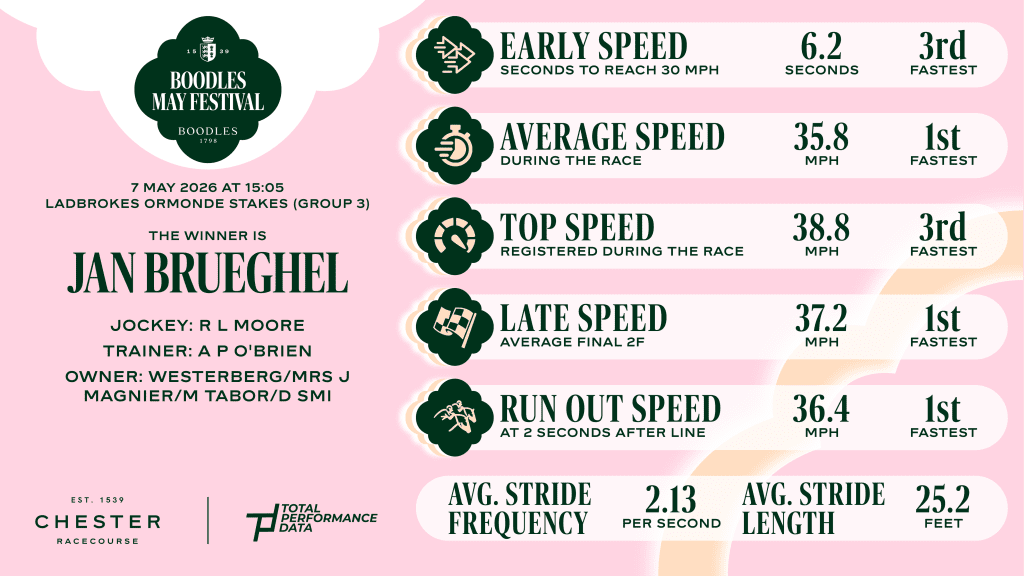
I’ve included our data infographic for the winner of the Ormonde Stakes this year, Jan Brueghel, trained by Aidan O’Brien. He won the Coronation Cup at Epsom last year and seems almost certain to be heading there again rather than going to Saratoga, but his data does serve to highlight the differences between middle distance turf racing in Europe and the US. An average speed of 35.8 mph is slower than those recorded for races of this nature in the US (see below) and points to the fact that as a general rule of thumb, the pace tends to develop later in the UK and Ireland, where emphasis is placed more highly on stamina, rather than gate speed and an early position. So what does a typical middle-distance turf winner in the US look like?
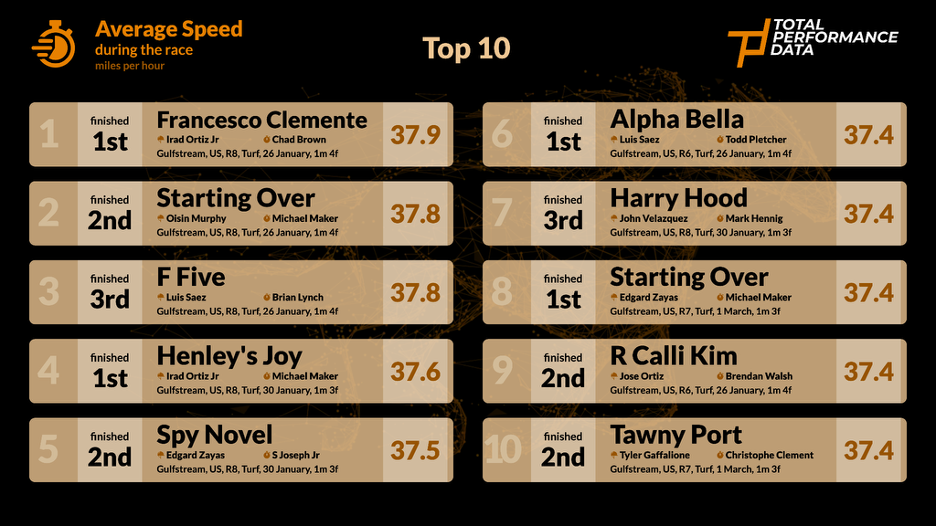
There are only a limited number of turf races in the United States that go beyond the 10-furlong trip, and the 2-miles of the Belmont Gold Cup is certainly an “outlier”. With that in mind, we decided to cast the net a little wider to try and give us a better understanding of what may be required. The infographic above shows the 10 fastest average race speeds recorded in turf races at 1 mile and 3 furlongs and beyond in the US since 2024. These figures are substantially quicker than the 35.2 mph average speed of a winner over the course and distance of the Ormonde Stakes, but it is again worth noting that the turning nature of the track at Chester does play a part in that. It’s also important to consider that the figures above include races down to 11 furlongs. Here’s a look at the data for Parchment Party when he won the Belmont Gold Cup in 2025 at Saratoga;
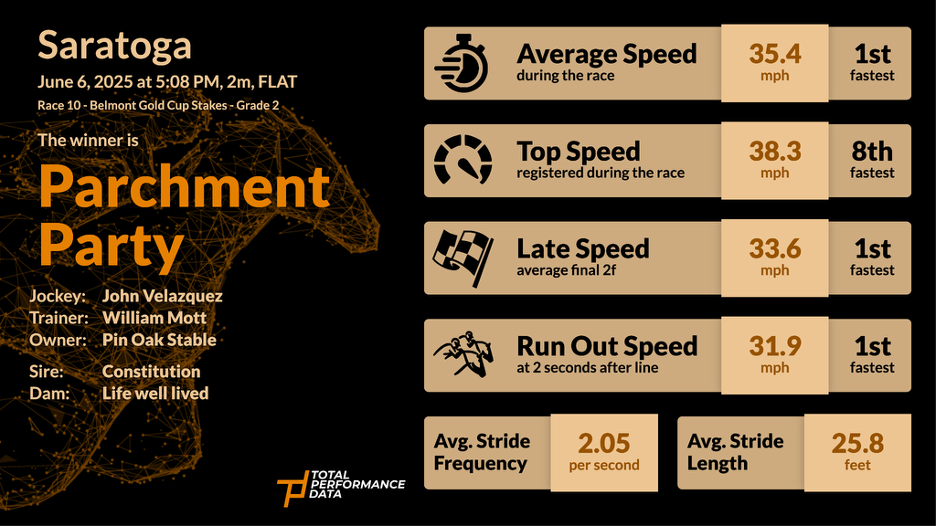
This data would offer a lot more hope to the winner of the Ormonde Stakes and in truth, it probably offers a more realistic comparison between the 2 races. When winning the Ormonde Stakes at Chester, Jan Brueghel recorded a faster average speed (36.6 mph), a faster top speed (38.8 mph), a faster late speed (37.2 mph) and a better run-out speed figure (36.4 mph). If we also add in that he had a higher average stride length (2.13 strides per second) and a longer peak average stride length (26.1 ft) and it would offer further hope.
We may have to wait another year to find out, but the data that’s available to us from both Chester and the courses run by the New York Racing Association would suggest that it would be possible for a horse to complete a historic double. The winners of the Ormonde Stakes and the Huxley Stakes in 2026 certainly ran to a comparable level of the recent top performers on the turf in the US over these distances and it will be fascinating to see if the future winning connections take up the opportunity to travel to New York in search of a big payday.